Frontline Innovators
This is Frontline Innovators. Host Justin Lake speaks with experts who are leading the way and driving digital transformation to the frontlines. We explore how to overcome challenges and achieve success when we empower our essential workers. This podcast is sponsored by Skyllful, on a mission to help frontline workers learn and use the technology needed to succeed in their jobs.






Episodes
Jun 22, 2021
Jun 22, 2021
51 min
On this episode of Frontline Innovators, we discuss new technology and analytics of today’s desk-less frontline workforce. What is the best technology for your team? How can companies better address the frontline workers’ pain points?
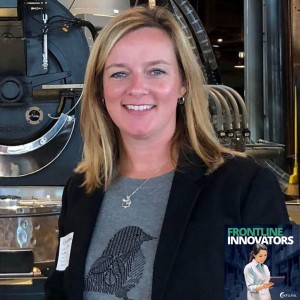
Deanna Self, Industry Principal - Supply Chain at Zebra Technologies, shares her experience with frontline workers and addressing pain points through technology implementation.
Takeaways
Being desk-less is one of the biggest challenges facing the frontline workforce. It can be a challenge keeping up to date on new policies without easy access to communication through technology.
Many companies do not have analytics on the frontline. These are essential to optimizing operations and deciphering whether or not the go-to-market strategy needs to be reorganized.
Not everything requires technology to be solved. Find what makes the most sense for your organization based on the long term objectives.
When discussing with the frontline workforce you are often talking within silos. A lot of times a company will implement a change but not understand how it will impact up or down stream.
Be proactive on the innovation front. Look at the technology through a need to have versus want to have lens. Is implementing _____ technology going to help now or is it something to circle back to in the future.
The pandemic allowed people to prove that they can accomplish their tasks outside of the traditional work settings.
Links
LinkedIn: https://www.linkedin.com/in/deannaself22/
Company: https://www.zebra.com/us/en.html
Company LinkedIn: https://www.linkedin.com/company/zebra-technologies/
Ways To Tune In
Amazon Music - https://music.amazon.com/podcasts/2f4ecd92-6468-4769-b0bf-254e236510b7/FRONTLINE-INNOVATORS
Apple Podcast - https://podcasts.apple.com/us/podcast/frontline-innovators/id1572329402
Google Play - https://podcasts.google.com/feed/aHR0cHM6Ly93d3cuZnJvbnRsaW5laW5ub3ZhdG9ycy5jb20vZmVlZC54bWw
Spotify - https://open.spotify.com/show/29m3wnK8pbFjdSvJ9wjmyS
Stitcher - https://www.stitcher.com/show/frontline-innovators
Youtube - https://youtu.be/GgbME5XWTJo

Jun 17, 2021
Jun 17, 2021
52 min
On this episode of Frontline Innovators, Michael Langley, VP of Business Transformation at Pepsi Bottling Ventures, joins host Justin Lake to discuss the challenges of implementing technology that directly impacts the frontline workforce.
Michael brings true awareness, and a sense of empathy as a former driver himself! “Meet them where they are,” Michael says. It’s important to have first hand experience with the frontline worker, not just build technology from a conference room.
Takeaways
Meeting them where they are - in terms of technical proficiency and other job skills, and how they accept change, are they willing to accept change
Change management is key for digital adoption. If you want end users to embrace new technology, make them part of the process! Don’t just ask for input but include end users in the process!
Understanding the frontline workers is critical. Frontline workers need to be part of the dedicated team to understand how they’re trying to use the information, their constraints and all the pain points… you need to spend some time in the field.
Look at people as individuals; age isn’t indicative of curiosity, aptitude or ability
The future of frontline workers and IT is about safety, security and creating easier workflows
For safety, drivers certainly play a crucial role, and anything that can help them be safer on the road, not robotics necessarily, should be explored
In stores, Google glasses may be a thing. Could this create more seamless ordering, or is it a potential security risk?
Looking to the future for change management; great idea to let technology take over for some manual, tedious things, which could help elevate some individuals roles
“I’ve been extremely blessed that I’ve had organizations that have supported me, family that has supported me, and certainly the ability to get the education needed to help me better be able to implement the technology and the skills I needed to be successful.”
Links
LinkedIn: https://www.linkedin.com/in/michael-langley-phd-b47a6bb/
Website: https://www.pepsibottlingventures.com/
Company LinkedIn: https://www.linkedin.com/company/pepsi-bottling-ventures/

Jun 15, 2021
Jun 15, 2021
51 min
On this episode of Frontline Innovators, we discuss new technology and automation in today’s desk-less frontline workforce. How are these innovations affecting workflow? Are they helping or hurting? What can be done to make application more adaptive for the workers?
Jennifer McComas, CTO, Energy and Utilities Industry Squad at IBM, shares her experience with frontline workers and the implementation of new technology solutions.
Takeaways
The pace of technology is one of the biggest challenges facing the frontline workforce. Although automation is intended to be helpful for the frontline, it becomes a hindrance for workers who are not accustomed to learning new technologies.
Oftentimes we use technology as a solution rather than reflecting on what the business objectives are and then looking at technology, if at all, to address the issue.
Implement technology with people, not to people, by starting a discussion with the frontline workers. Ask them what they are doing, what could be improved and their tolerance to adopting a technology solution.
Two common misconceptions behind artificial intelligence and automation are that 1) folks do not understand the algorithm behind the scenes and 2) they are not involved in the training process of the model.
“Automation and automated processes are the ultimate way to capture the important knowledge that was used to do [frontline work] in a way that can not only support the new worker that is coming along, but also creates a sustainable record of what that process is and why.” ~Jennifer
“There is never going to be a shortage of challenges or opportunities. Whether you are a desk-less, frontline, or knowledge worker we all need to be comfortable with change.” ~Jennifer
Links
LinkedIn: https://www.linkedin.com/in/jmccomas/
Website: https://www.ibm.com/us-en?ar=1
Company LinkedIn: https://www.linkedin.com/company/ibm/